 Delivery time approx. 3-5 working days
 Tracking number
 Secure payment
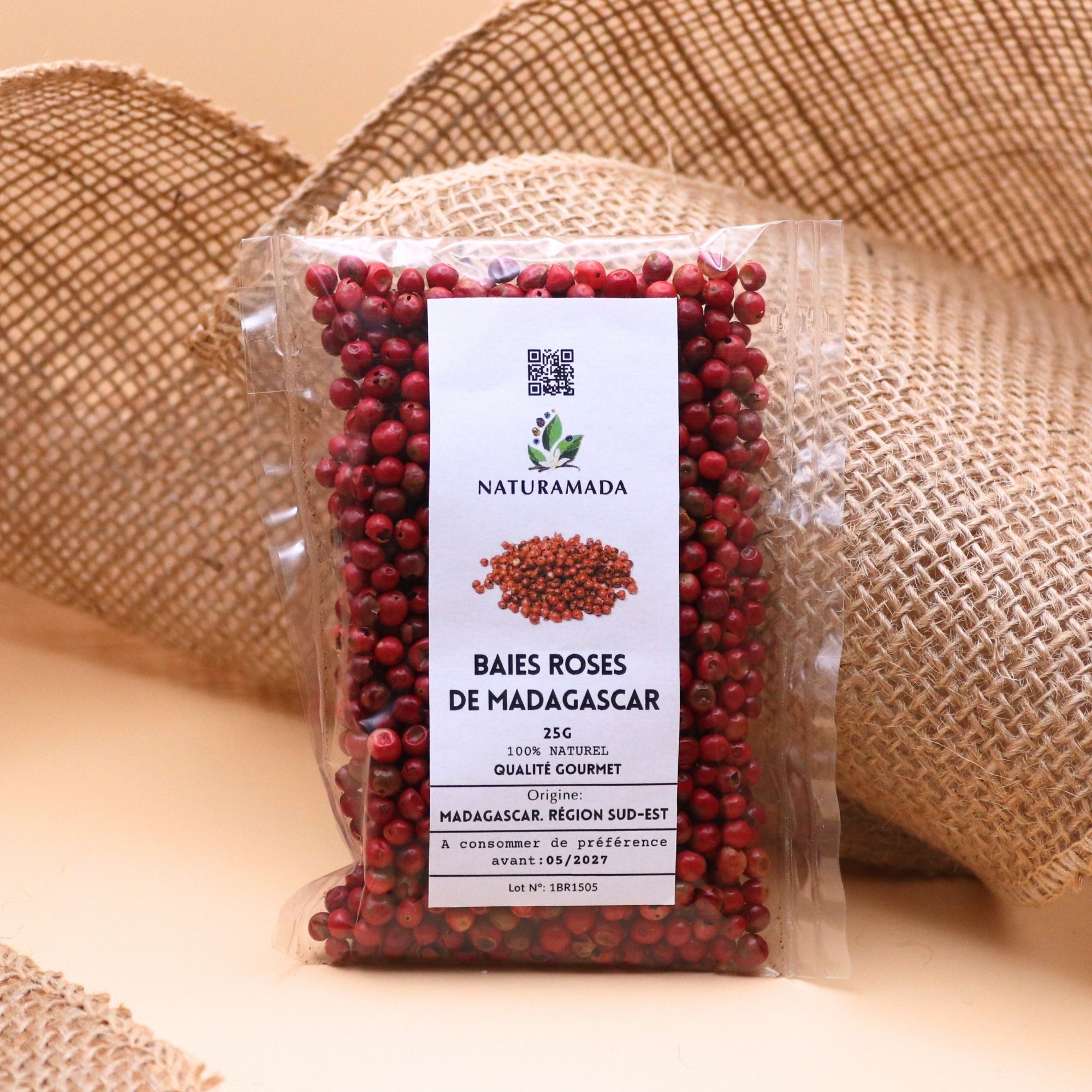
Naturamada Pink Berries – Schinus terebinthifolia
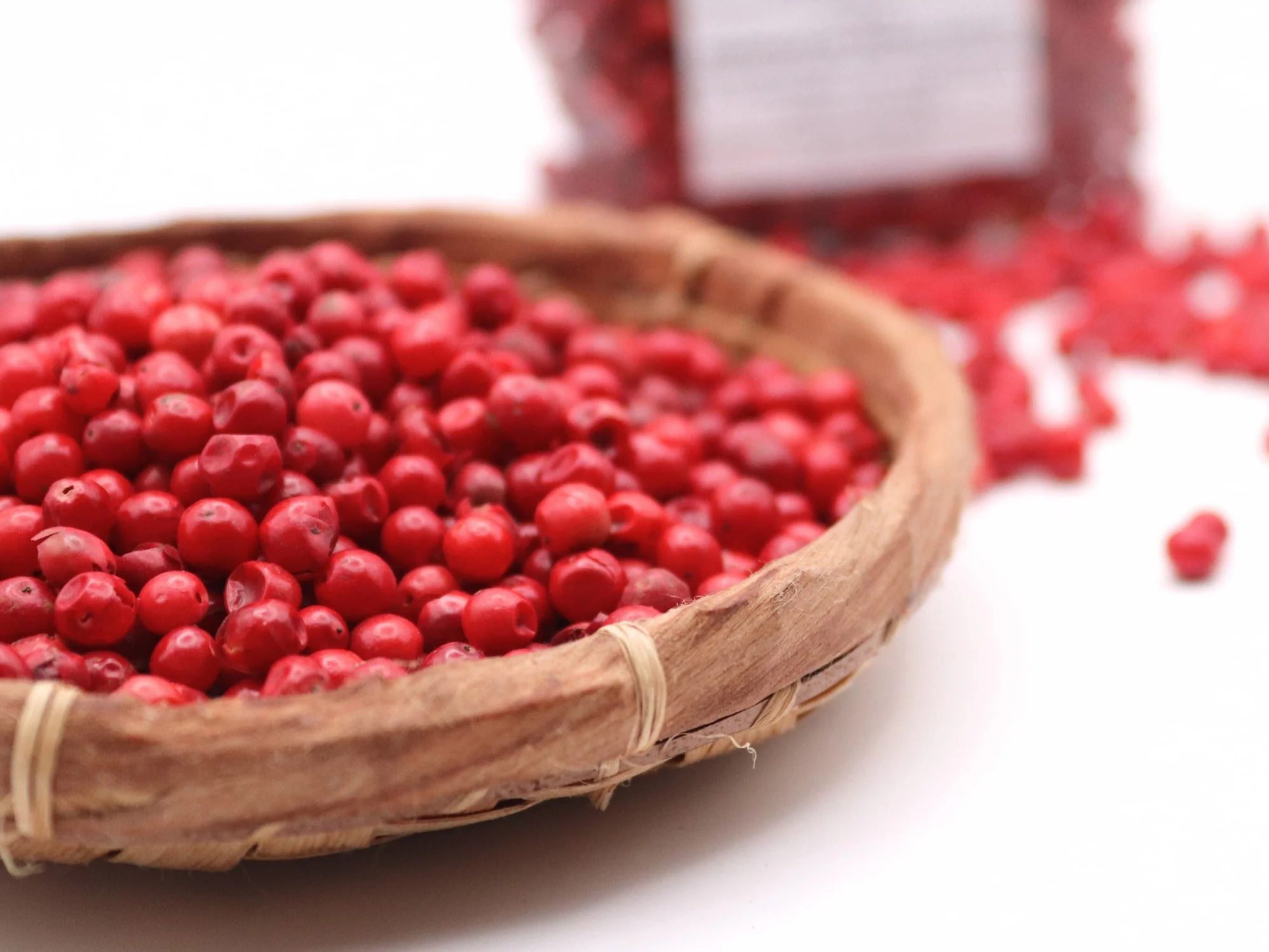
The pink berry comes from the false pepper tree, an ornamental member of the Anacardiaceae family. Native to South America, this tree has adapted perfectly to tropical and subtropical climates. Today, it can be found in Madagascar, Reunion Island, New Caledonia and many other warm regions around the world. It’s in Madagascar that we hand-pick these small, delicate berries when they reach bright pink maturity. Naturally dried, they retain their brilliant color and unique flavor: slightly peppery, resinous, with fruity and floral notes. Despite its name, the pink berry is not a real pepper, but it certainly deserves its place in your kitchen.
Why choose pink berries?
The pink berry has been conquering cuisines the world over since the 1980s. This delicate spice seduces with its sweetness and complex aromatic profile. Unlike classic peppers, it offers only a slight spiciness, offset by a remarkable fruity roundness . Great chefs have adopted it to enhance their gastronomic creations. It brings color, elegance and refinement to dishes from the simplest to the most sophisticated.
How to use pink berries in cooking
This versatile spice can be used in countless preparations. Its fragility requires delicate handling to preserve its subtle aromas.
With fish and seafood Pink bay excels as an accompaniment to seafood. It enhances smoked salmon, grilled shrimp, white fish tartar or pan-fried scallops. Just a few lightly crushed berries add a refined touch. It is often used in marinades for fish or flavored butters for shellfish.
In sweet and savory dishes Its fruity character makes it a natural choice for sweet and savory combinations. It deliciously flavors duck with orange, duck breast with red fruit, pan-fried foie gras with figs or pork with citrus. This spice creates harmonious bridges between sweet and savory.
Desserts Pastry chefs love to exploit its fruity notes. It perfumes white chocolate ganache, crème brûlée, panna cotta, red fruit sorbets and macaroons. Combined with strawberry, raspberry, lychee or chocolate, it reveals delicate and surprising combinations.
In drinks Mixologists use it in sophisticated cocktails. A few berries in a gin and tonic, rosé spritz or champagne add an original aromatic dimension. It can also be used to flavour homemade syrups, cold infusions and homemade lemonades.
With cheese The pink berry is a wonderful accompaniment to fresh cheeses, soft goat’s cheeses and creamy soft cheeses. Lightly crushed on a fresh goat’s cheese with a drizzle of honey, it creates a remarkable taste balance.
As a decorative seasoning Beyond its taste, pink berries are visually seductive. Its bright pink color illuminates dishes and adds an immediate aesthetic touch. It decorates mixed salads, carpaccios, aperitif verrines or gourmet plates with elegance.
Spice blends including pink berries
The pink berry blends harmoniously with many classic or creative spice blends.
Four berry blend This composition combines black pepperwhite pepper, green pepper and pink berries. This balanced blend offers different intensities of spiciness and fragrance. It is ideal for grilled meats, noble fish and refined pepper sauces.
The five berry blend An enriched version of the previous one, it adds Sichuan pepper to the quartet. This fifth berry brings lemony notes and a characteristic slightly anesthetic sensation. Perfect for Asian fusion cuisine.
Creative house blends Creative cooks combine pink berry, coriander, cardamom and dried orange zest for Mediterranean fish dishes. Or pink berry, vanilla and tonka for milky desserts. The possibilities are endless, depending on your culinary inspiration.
Advice on preparation and use
The pink berry requires a few precautions to reveal its full aromatic potential.
Unlike real peppers, pink peppercorns don’t take well to prolonged cooking. Add it at the end of cooking or just before serving to preserve its delicate aromas. Excessive heat destroys its volatile compounds and diminishes its characteristic fragrance.
Gently crush Pink berries break easily. Simply crush with the flat of a knife or between the fingers. Avoid the traditional pepper mill, which will reduce them to a fine powder. A few whole or coarsely crushed berries offer the best taste and visual effect.
Dose sparingly Its delicate taste can quickly be overpowered by other, more powerful spices. Always start with a small amount, then adjust according to your preferences. A dozen berries are usually enough for a four-person dish.
Beware of allergies Those allergic to cashews, pistachios or mangoes should exercise caution. The pink berry belongs to the same botanical family and may cause cross-reactions in certain sensitive individuals.
Product information
-
Botanical name: Schinus terebinthifolia
-
Origin: Madagascar
Naturally dried whole berries
Packaged in France
FAQ – Pink berries
What do pink berries taste like?
Pink berries have a mild, slightly peppery flavor with fruity and resinous notes. Their spiciness remains very moderate compared to true peppers. There are floral, slightly sweet nuances, sometimes reminiscent of citrus or red fruit. This aromatic complexity explains their success in gourmet cooking.
How to use pink berries in cooking
Lightly crush the berries between your fingers or with the flat of a knife to release their aromas. Add them at the end of cooking to fish, shellfish, poultry or desserts. They can also be used whole to decorate and visually enhance your dishes. Avoid long cooking times, which alter their delicate flavor.
Is the pink berry a real pepper?
No, despite its name and appearance, the pink berry is not botanically a pepper. It comes from the false pepper plant (Schinus terebinthifolia) of the Anacardiaceae family, while true peppers belong to the genus Piper. Its resemblance and slight spiciness have earned it this popular appellation, but its chemical composition is totally different.
Are your pink berries harvested by hand?
Yes, our pink berries come from Madagascar, where they are hand-picked when they reach their perfect bright pink ripeness. Natural drying preserves their brilliant color and subtle aromas. This artisanal process guarantees consistent quality and an authentic product.
How to store pink berries?
Store your pink berries in an airtight container away from light, heat and humidity. An opaque glass jar or well-sealed metal can is ideal. Their fragility requires delicate handling.