 Delivery time approx. 3-5 working days
 Tracking number
 Secure payment
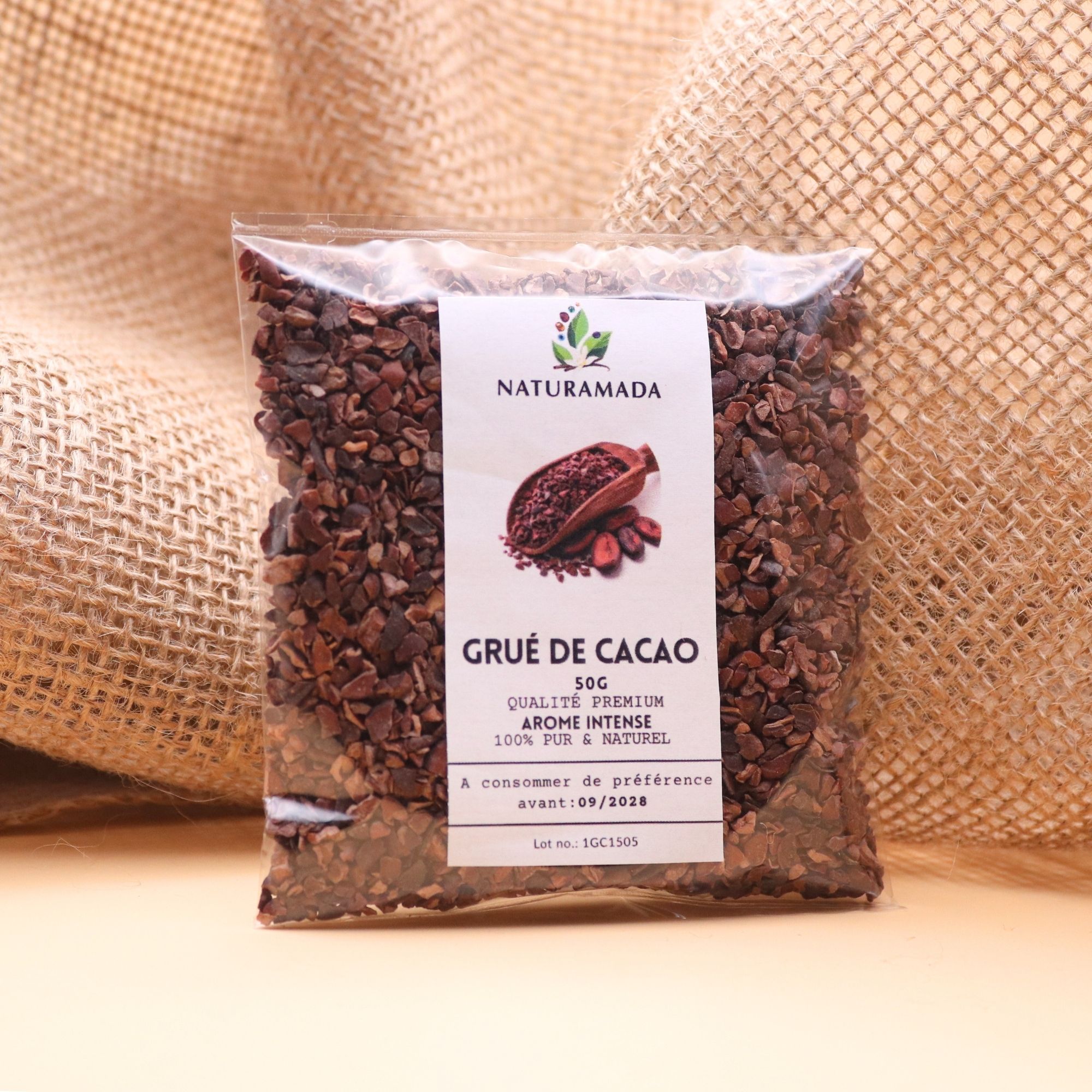
Naturamada Cocoa nibs – Theobroma cacao
Cocoa nibs are the purest, rawest form of cocoa. These crunchy chips come from roasted, then crushed cocoa beans. The cacao tree, a tropical member of the Sterculiaceae family, originated in Central America and Amazonia. Cultivated for millennia by pre-Columbian civilizations, it then spread to all tropical regions of the world. The grué offers a pure, intense and slightly bitter cocoa taste, with fruity and woody notes. With no added sugar or processing, it embodies the very essence of chocolate.
Naturamada cocoa nibs are the nibs of roasted cocoa beans, simply crushed after fermentation and drying. It reveals cocoa in its most authentic form, with an intense, slightly bitter and aromatic flavor.
Appreciated for its natural crunchiness, cocoa nibs are used in everyday cooking as well as in more creative preparations.
Why choose our Madagascar cocoa nibs?
Madagascan cocoa has a reputation for excellence among chocolatiers the world over. The terroirs of the island’s north-western coast, in particular the Sambirano valley, produce fine, aromatic cocoa that is much sought-after. Our grué comes from these plantations, where cocoa trees grow alongside ylang-ylang, vanilla and pepper trees in a diversified agriculture. This natural agroforestry enriches cocoa aromas while preserving biodiversity. Unlike ultra-processed industrial chocolate, grué retains all the natural components of the bean: polyphenols, magnesium, iron and fiber. Choosing our grué means discovering the true taste of cocoa in its most authentic form.
How to use cocoa nibs in cooking
This crunchy nugget can be used in countless sweet and savoury preparations. Its unique texture and powerful taste transform ordinary recipes into gourmet creations.
For topping and garnish:
The most popular use is to sprinkle on your creations. It adds an intense crunch to smoothie bowls, porridges, yoghurts, fromage frais and chia puddings. Sprinkle it generously over your dairy desserts to add texture and character. Pastry chefs use it to decorate cakes, chocolate mousses, tiramisus, cheesecakes or entremets. Its raw appearance and glossy sheen create a highly sought-after artisanal visual effect.
For pastries and desserts:
Oatmeal is perfect for use in cookie doughs, brownies, muffins, cakes and granola bars. Incorporated into the preparation, it provides crunchy chips that burst under the bite. Unlike chocolate chips, which melt, grué retains its texture even after baking. It enriches shortbread pastries, crumbles, shortbread cookies and financiers. Combined with hazelnuts, almonds or walnuts, it creates irresistible gourmet blends.
In energy balls and healthy snacks:
Healthy food fans love it in homemade energy balls. Mixed with dates, almond butter, shredded coconut and seeds, it makes nutritious, high-energy snacks. It can also be used to make homemade energy bars, homemade granolas and personalized trail mixes for athletes. Its magnesium content and intense taste make it a valuable ally for healthy snacks.
Incorporating homemade chocolate:
Amateur chocolatiers use it to texture their homemade chocolate bars. Added to tempered chocolate before molding, it creates crunchy, “bean-to-bar” chocolate bars. This artisanal technique is reminiscent of the creations of the finest bean-to-bar chocolatiers. You can also coat it with melted chocolate to create your own cocoa-flavored dragées.
For savoury dishes:
Contemporary chefs are exploring the savory uses of grué. It lends an elegant bitterness to chocolate sauces for game (royal hare, venison). Lightly dry-roasted, it can be incorporated into spice crusts for duck breasts or red meats. Some even use it in mixed salads with beet, fresh goat’s cheese and walnuts, creating surprising textural contrasts.
Product information
Botanical name: Theobroma cacao
Origin: Madagascar
Roasted and crushed cocoa beans
100% pure, no sugar, no additives
Packaged in France
FAQ – Cocoa nibs
What does cocoa nib taste like?
The grué offers the pure, authentic taste of cocoa, without sugar. Its natural bitterness dominates the first impression, followed by complex notes: fruity (red fruit, citrus), floral, woody and slightly astringent. Madagascar cocoa often reveals characteristic tangy notes. This intensity suits lovers of strong dark chocolate (85% and over) and those seeking theraw essence of cocoa.
How do you use cocoa nibs on a daily basis?
Sprinkle generously on yoghurts, smoothie bowls, porridges or fromage frais in the morning. Add a handful to cookie dough, brownies or muffins. Mix with dried fruit and oilseeds for an energizing snack. Add to homemade granola or energy balls. Count on 1 to 2 tablespoons per person for a topping, or 50 g for a cake recipe (6-8 parts).
Can cocoa nibs replace chocolate chips?
Yes, but with one notable difference. The grué adds an intense crunch and a pure bitter cocoa taste, whereas the chocolate chips melt and add sweetness. If you like very strong dark chocolate, grué is an excellent, healthier alternative(with no added sugar). To sweeten, combine with naturally sweet ingredients such as honey, bananas or dates. Some people like to mix nibs and chips to combine a crunchy texture with a sweet melt-in-the-mouth texture.
Is your grué really sugar-free?
Absolutely. Our grits contain only roasted and crushed cocoa beans, nothing else. It contains only the sugars naturally present in the raw cocoa bean (around 1%), which is negligible. No sugars, sweeteners, preservatives or additives are added.
How to store cocoa nibs?
Store in an airtight, opaque container, away from light, heat (ideally below 20°C) and humidity. Keep away from fragrant foods, as cocoa absorbs odors easily. A slight white haze may sometimes appear (crystallization of cocoa butter): this is normal and does not affect taste or quality. Avoid the refrigerator, which creates condensation.