 Delivery time approx. 3-5 working days
 Tracking number
 Secure payment
Black Copal from Mexico
Natural resin from the genus Bursera – Origin: Mexico
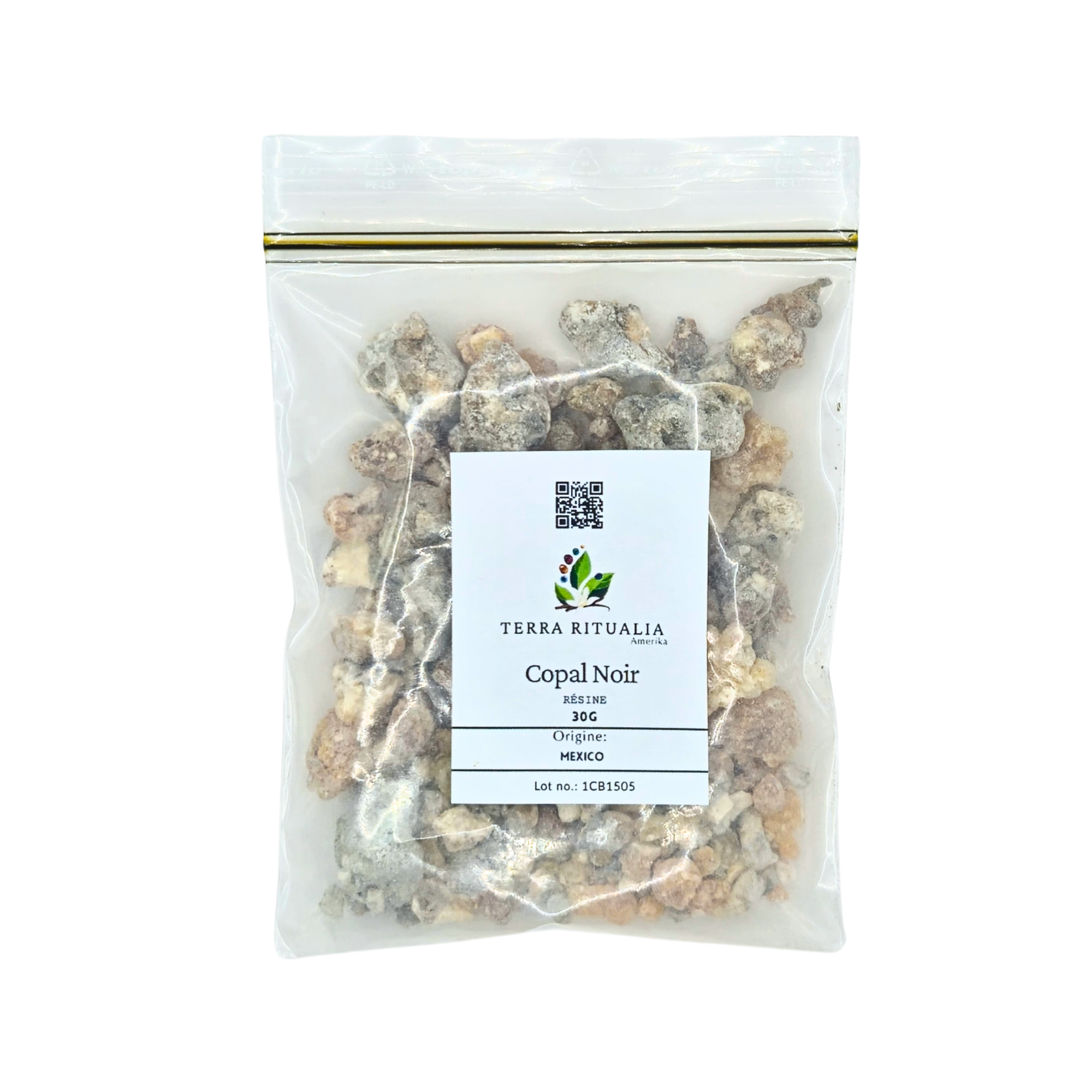
Black copal from Mexico is a natural resin harvested from trees of the Bursera genus, found in the states of Guerrero, Morelos, Puebla, and Oaxaca. Since pre-Columbian times, this resin has been used in purification rituals, offerings, and ceremonies in Mexican traditions. Darker and denser than its white counterpart, it is burned on hot charcoal to release a deep smoke with heavier, more enveloping notes.
Why choose black copal?
Copal has long held a special place in Mesoamerican cultures, where it is sometimes called “food of the gods” or “copalli,” a Nahuatl term meaning incense. It was already used in Aztec and Maya ceremonies, burned as an offering at the tops of pyramids to mark a transition, consecrate a space, or bring an important moment to a close. Even today, this resin retains that function: it invites us to slow down, to prepare a place or a moment before a practice—meditation, a ritual, or a moment of personal reflection.
A resin with mystical symbolism
Known as “copal of the night, ” black copal possesses a more mysterious and profound energy than its lighter variety. In Aztec tradition, the sacred resin of the tree—then known as Copalquàhuitl —could only be handled on the altar with wooden instruments, as it was considered a direct link between the world of the living and the divine. Its smoke was used to purify the atmosphere of all negative influences and to accompany the most intense rituals. Whereas white copal evokes clarity and daytime practices, black copal is more suited to introspection, communication with the unseen world, and moments when one seeks to deeply refocus, far from the hustle and bustle of the outside world.
How to Use Black Copal
Copal is burned on a special incense charcoal that has been lit beforehand and left for a few moments until it becomes incandescent and is covered with a thin layer of gray ash. A few small drops of resin are then placed on it, and they gradually release their smoke.
Precautions for Use:
- Use a suitable, heat-resistant burner placed on a stable, non-flammable surface
- Always monitor the burning process and ventilate the room during and after fumigation
- Never leave a burning charcoal briquette unattended; keep it out of reach of children and pets.
- Do not ingest
The Ritual Gesture
More than just a home fragrance, burning copal is an act that marks a moment: before meditation, to accompany a transition, or to bring the day to a close. It is this slowness—preparing the charcoal, waiting, watching the smoke rise—that gives the ritual its full meaning, in contrast to the immediacy of everyday life.
Product information
Name: Black Copal
Origin: Mexico
Form: Teardrop-shaped resin
Packaged in France
FAQ: Black Copal from Mexico
Does black copal need charcoal to burn?
Yes, like all natural resins, copal does not burn on its own: it is placed in small amounts on a glowing charcoal briquette used for fumigation.
What is the difference between black copal and white copal?
Black copal, which is darker and denser, carries a nocturnal and mysterious symbolism, while white copal has a fresher, lighter scent, traditionally associated with light and the daytime.
Can black copal be combined with other resins or incense?
Yes, black copal blends well with myrrh, frankincense, or palo santo in incense blends.
Are there any special precautions to take?
Yes—smoking should always be done in a well-ventilated area, using an appropriate burner, and the charcoal should never be left unattended.