
Wild Voatsiperifery pepper:
Origin, Benefits & Recipes
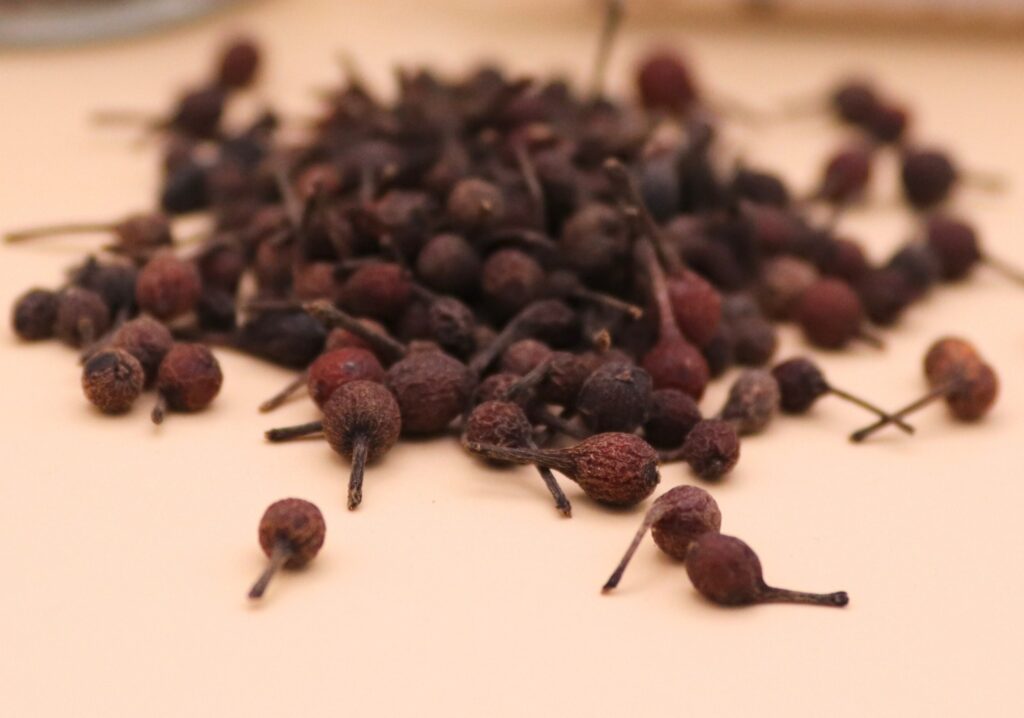
Voatsiperifery, also known as Piper borbonenseis a wild pepper endemic to Madagascar, gathered from forest vines. Its reputation is now worldwide. As they dry, the berries, marked by a small tail, develop woody, earthy and fruity aromas. As a result, they concentrate exceptional aromatic power, a true taste signature found nowhere else.
Origin and history of Voatsiperifery pepper
Voatsiperifery (or tsiperifery in Malagasy) has been known to the local population for a very long time. The plant is part of Malagasy oral tradition and practice, but its first written mentions date back to colonial times (Razafimandimby & Queste, 2024). French missionaries and explorers described a small berry used in traditional medicine to treat venereal diseases and colic. At the time, specimens of this wild pepper were sent to the Muséum national d’histoire naturelle in Paris.
It wasn’t until the early 2000s that voatsiperifery gained international fame. Two Michelin-starred French chefs rediscovered it around 2004, triggering a gradual craze: since 2010, worldwide demand has exploded. The ingredient was then imported to Europe as a “new forest pepper”, whose subtle flavor seduced haute gastronomie.
In Malagasy, the name voatsiperifery comes from voa (“fruit”) and tsiperifery, meaning “that makes sores non-existent”. This name evokes the plant’s traditional medicinal use to heal wounds (Razafimandimby & Queste, 2024). Its name also underlines its botanical link: voatsiperifery is a vine in the Piperaceae family, closely related to black pepper(Piper nigrum). To date, tsiperifery has no single valid scientific name.
Traditional uses and cultivation - Agroforest
Historically, Voatsiperifery was not intended for export. It was mainly used locally, in Malagasy regional cuisines, but also as a prestige spice for community meals and ceremonies. Its rarity and the difficulty of harvesting gave it a special value, quite different from the large-scale cultivated peppers introduced later through colonial trade.
It wasn’t until the end of the XXᵉ century that Voatsiperifery began to gain international recognition, particularly from chefs and specialist grocery stores, who were interested not only in its woody, slightly lemony and floral aromatic profile, but also in its singular history. This recent recognition is part of a wider movement to promote wild spices and local knowledge, without heavy industrial processing.
Voatsiperifery is intimately linked toMadagascar’s forest ecosystem. Its growth depends on preserved forests, making it an emblematic example of a spice whose very existence is linked to environmental balance. Traditional harvesting practices are based on selective picking, aimed at preserving the liana and allowing the plant to regenerate naturally.
Today, this territorial and ecological dimension is an integral part of the Voatsiperifery identity. It explains why this spice is often presented not only as a culinary ingredient, but also as a witness to a living natural and cultural heritage.
Why do chefs love Voatsiperifery?
If Voatsiperifery pepper has won over many contemporary chefs, it’s not because of fashion, but for very specific sensory and technical reasons. Unlike classic cultivated peppers, dominated by the pungency of piperine, Voatsiperifery is distinguished by its low aggressiveness on the palate and exceptional aromatic complexity. This is due to its chemical composition: it contains little piperine, but a high proportion of volatile aromatic compounds, notably terpenes, responsible for woody, resinous, slightly lemony and floral notes.
For chefs, this means a spice that doesn’t mask the ingredients, but accompanies them. Voatsiperifery can be used to season delicate products such as fish, shellfish, vegetables, fruit, chocolate or desserts, without overpowering their taste. Its aromatic rise is gradual, almost tactile, which makes it particularly interesting in contemporary kitchens focused on balance and precision.
Another essential point for contemporary gastronomy: Voatsiperifery is a non-standardized spice, harvested from the forest. Each batch reflects a territory, a season and a harvesting method, in line with today’s chefs’ quest for traceable, unique products with a distinctive identity. Ethnobotanical research shows that this spice is deeply linked to Malagasy forestry knowledge, which reinforces its cultural as well as culinary interest (Razafimandimby et al., 2017).
Finally, Voatsiperifery is fully in line with a modern culinary approach based on precise seasoning, aromatic precision and respect for raw materials. More than a powerful pepper, it’s a spice of finesse, enriching a dish without masking it, a quality now central to haute cuisine.
Traditional uses and Malagasy heritage
Warning
The nutritional and well-being information presented in this article is based on traditional practices and studies currently available. It is not a substitute for personalized medical or nutritional care. Before including any new food or supplement in your diet, always seek the advice of a healthcare professional.
Voatsiperifery is deeply rooted in Madagascar’s cultural heritage. Rural communities living on the edge of the forest traditionally use it in several ways:
Traditional medicine: as a decoction or poultice, it was used to treat a variety of ailments. For example, the leaves of Piper borbonense (probable botanical name) are used to treat stomach upsets (Rakotoarivelo et al., 2015). It is also said to have healing properties (wound treatment) and to relieve respiratory, dermatological, venereal or sexual ailments.
Culinary: This pepper is a popular local condiment for spicing up dishes. It often replaces sakay (traditional hot pepper) in Malagasy cuisine. Tsiperifery berries are crushed or ground to season meats, sauces and broths, providing a “forest” spice with woody flavors. Locals even call it “sakaiala”(forest pepper) or “sakarivonala”(forest ginger), depending on the morphology of the berries (Razafimandimby et al., 2017).
Ritual and spiritual: Some traditional beliefs attribute protective powers to tsiperifery. The leaves are used in rituals to protect against lightning and rain, and the stems or roots are infused to combat evil spells. These uses confirm the plant’s strong place in the Malagasy cultural imagination.
Thus, voatsiperifery harvesting is more than just an economic activity: it’s a part of Malagasy ancestral knowledge handed down for generations. Its cultural role contributes to its image as Madagascar’s “ambassador”, underlined only by its position as an endemic spice exported from the island.
Harvesting, industry and challenges
The harvesting of Voatsiperifery is based on ancient forestry know-how handed down from generation to generation among rural communities living close to Madagascar’s rainforests. Pepper grows wild on climbing vines, sometimes several meters high, which requires meticulous hand-picking and a thorough knowledge of the forest environment. This traditional practice distinguishes Voatsiperifery from cultivated peppers and contributes to its rare and precious character (Razafimandimby et al., 2017).
Over the past twenty years, growing interest in this spice has led to a gradual structuring of the industry. Scientific research and local initiatives have led to a better understanding of the plant’s biology, its fruiting cycles and the conditions required for its natural regeneration. Today, this knowledge is helping to improve harvesting practices, with a focus on methods that are more respectful of the vine and its environment.
In addition, several pilot projects in Madagascar are exploring the rational management and gradual domestication of tsiperifery, to complement wild harvesting and ensure sustainable availability of the resource. These approaches aim to strengthen local incomes while valuing the forest as a living, productive space, rather than as a resource to be depleted (Razafimandimby et al., 2017).
Today, Voatsiperifery is part of a dynamic in which the preservation of traditional knowledge, economic development and attention to ecosystems go hand in hand. This evolution explains why this wild pepper is increasingly recognized not only for its aromatic qualities, but also for the human and territorial history it carries.
And just for fun…
Easy recipe: sautéed shrimp with wild pepper
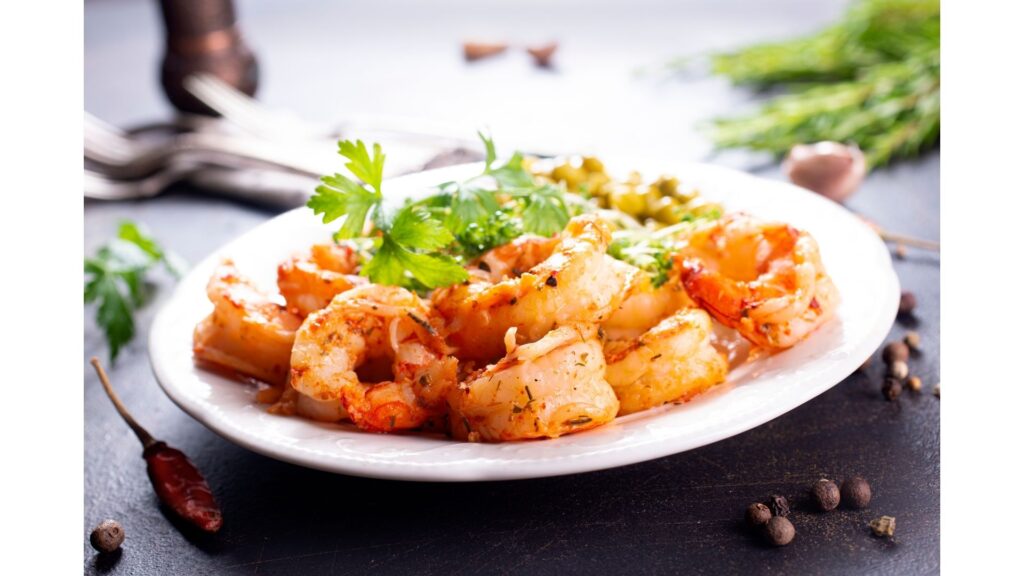
Ingredients:
500 g peeled shrimp
2 garlic cloves
2 tablespoons olive oil
1 c. to c. from wild pepper crushed
Juice of half a lemon
Salt
Preparation:
Heat the olive oil with the chopped garlic. Add the shrimp and sauté quickly. Sprinkle with cracked wild pepper, salt and lemon juice. Serve immediately with fragrant rice or crisp vegetables.
Conclusion
Voatsiperifery wild pepper occupies a singular place among the world’s spices. At the crossroads of the Malagasy forest, local knowledge and contemporary gastronomy, it embodies a “terroir” spice in the full sense of the word: shaped by a specific environment, a long history and uses rooted in everyday life. Its complex aromatic profile, warm, woody and slightly floral, explains the growing interest it is arousing among discerning chefs and spice lovers. But beyond its gustatory qualities, Voatsiperifery is a reminder of the importance of preserving the balance between biodiversity, human practices and the transmission of knowledge. Understanding its origin, harvesting and uses enables us to appreciate it not just as a simple condiment, but as the living expression of Madagascar’s natural and cultural heritage.
Bibliography
Rakotoarivelo, N. H., Rakotoarivony, F., Ramarosandratana, A. V., Jeannoda, V. H., Kuhlman, A. R., Randrianasolo, A., & Bussmann, R. W. (2015). Medicinal plants used to treat the most frequent diseases encountered in Ambalabe rural community, Eastern Madagascar. Journal of Ethnobiology and Ethnomedicine, 11, Article 68. https://doi.org/10.1186/s13002-015-0050-2
Razafimandimby, H., Benard, A.-G., Andrianoelisoa, H., Leong Pock Tsy, J.-M., Touati, G., Levesque, A., Weil, M., Randrianaivo, R., Ramamonjisoa, L., Queste, J., Aubert, S., Danflous, J. P., & Danthu, P. (2017). Tsiperifery, the wild pepper from Madagascar, emerging on the international spice market whose exploitation is unchecked: Current knowledge and future prospects. Fruits, 72(6), 331-340. https://doi.org/10.17660/th2017/72.6.1
Razafimandimby, H., & Queste, J. (2024, February 26). Discovering the world’s best pepper. The Conversation. https://doi.org/10.64628/AAK.93uxh6scq
Did you like this article?
See also: