 Delivery time approx. 3-5 working days
 Tracking number
 Secure payment
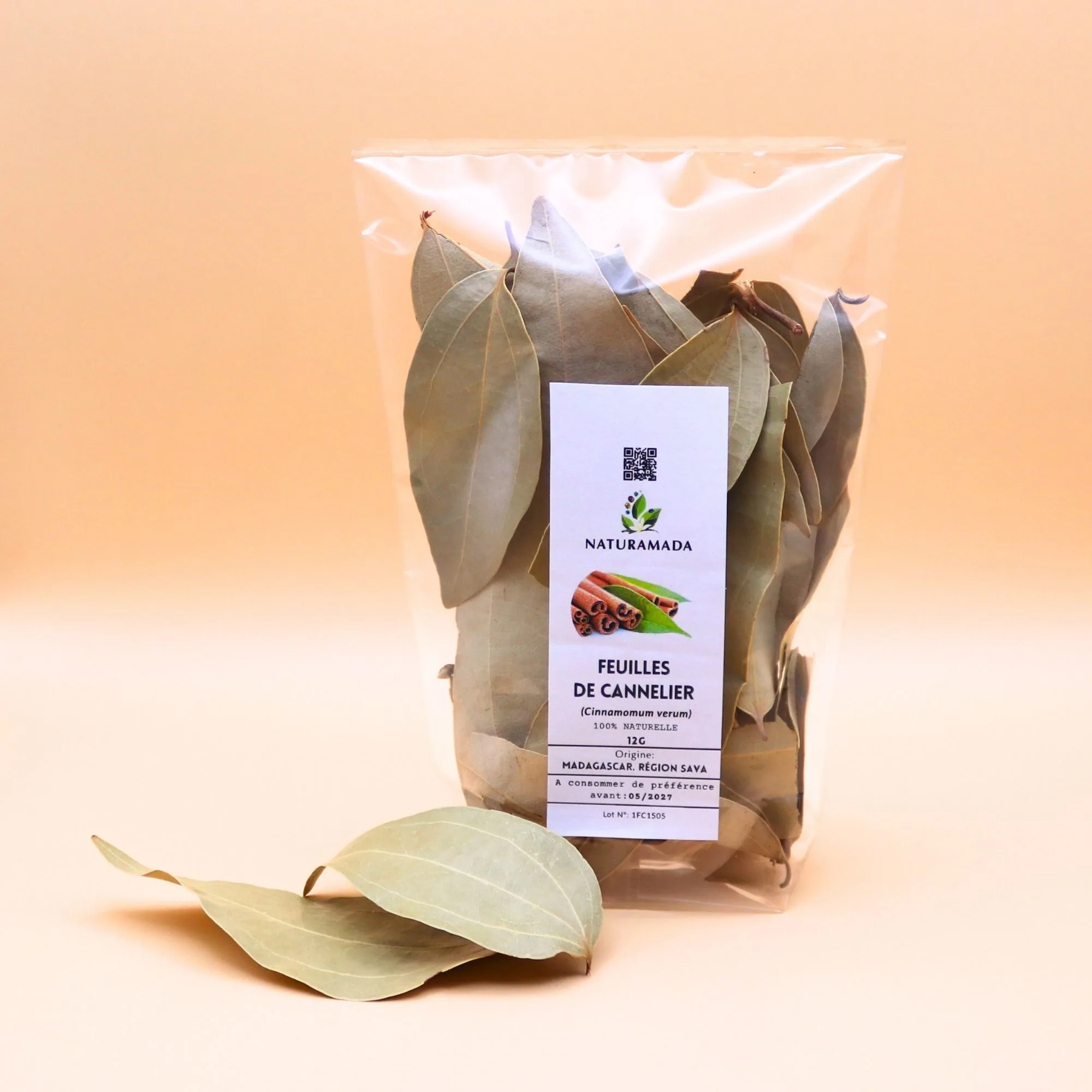
Cinnamon leaves Naturamada – Cinnamomum verum
Naturamada cinnamon leaves come from the Cinnamomum verum ceylanicum cinnamon tree, an emblematic species of northeastern Madagascar, a region renowned for the quality of its spices. Hand-harvested and naturally dried, these leaves preserve their characteristic aroma: sweet, warm and slightly spicy. Less well-known than cinnamon bark, they are nevertheless a spice in their own right, rich in fragrance and virtues.
Why choose cinnamon leaves?
Compared to bark, cinnamon leaves are softer and more delicate. Their fragrance is released slowly during cooking, and doesn’t overwhelm other flavors. That’s exactly why cooks love them. What’s more, they’re rich in antioxidants and essential oils.
How to use cinnamon leaves in cooking
Cinnamon leaves are very versatile. You can use them in almost any type of cuisine.
In Indian and Sri Lankan cuisine, they accompany biryani and curries. They release their fragrance gradually. The result is a delicate note that balances the spices.
In Madagascan and Indian Ocean cuisine, they add fragrance to stews and broths. They enrich the flavor without masking the other ingredients. It’s a perfect balance.
In North African cuisine, tajines and simmered meats benefit from their comforting heat. Mild spice blends are also ideal.
In European cuisine, think compotes and poached pears. Rice pudding and spiced wine are also excellent with these leaves.
Tip: Add the whole leaves at the start of cooking. Remove them before serving. Like bay leaves, they give a subtle aroma without being overpowering.
Infusion and decoction of cinnamon leaves
Cinnamon leaves aren’t just for cooking. They are also an invaluable ally for well-being.
A simple infusion is all it takes to enjoy their comforting warmth. Simply boil some water. Then add one or two whole leaves. Leave to infuse for 5-10 minutes. The result is a soothing, digestive drink.
In Ayurvedic traditions, the leaves have been used for centuries, particularly during the cool, wet seasons. They help support digestion. They also provide a feeling of inner warmth.
You can also use them to perfume a room. Add a few leaves to a bowl of hot water. Let them infuse on your desk or in your bath. It’s a very simple relaxation ritual.
Product information
-
Origin: Northeast Madagascar, hand-picked and naturally dried
-
Composition: 100% whole Cinnamomum verum leaves, no preservatives or additives
- Packaged in France
- 100% natural
FAQ – Cinnamon leaves
What do cinnamon leaves taste like when infused?
Cinnamon leaves offer a warm, fragrant infusion, with spicy, slightly woody and fresher notes than cinnamon bark. Their flavor is generally milder and more herbal, making them pleasant to consume on their own or mixed with other plants and spices.
How to prepare an infusion of cinnamon leaves?
It is generally advisable to use 1 to 2 leaves per cup of hot water (250 ml). Pour simmering water over the leaves and leave to infuse for between 5 and 7 minutes, depending on the desired intensity. Leaves can also be used as a decoction by boiling them for a few minutes to release more of their aroma.
As with any plant used as an infusion, it is advisable to seek the advice of a health care professional before regular or prolonged consumption.
Can cinnamon leaves be used in cooking?
Yes, in many traditional Asian and Indian cuisines, cinnamon leaves are used to flavor curries, simmered dishes, broths and certain marinades. They add a more subtle spiciness than the bark.
Are cinnamon leaves natural and harvested by hand?
Yes, the leaves are harvested by hand and then dried naturally to preserve their aromatic qualities. This slow-drying method preserves their fragrance while respecting traditional preparation practices.
How to store cinnamon leaves?
We recommend storing the leaves in a dry place, away from light and humidity, ideally in an airtight container. This preserves their aroma and quality for longer. To take full advantage of their fragrance, it’s best to use them whole when preparing them.