 Delivery time approx. 3-5 working days
 Tracking number
 Secure payment
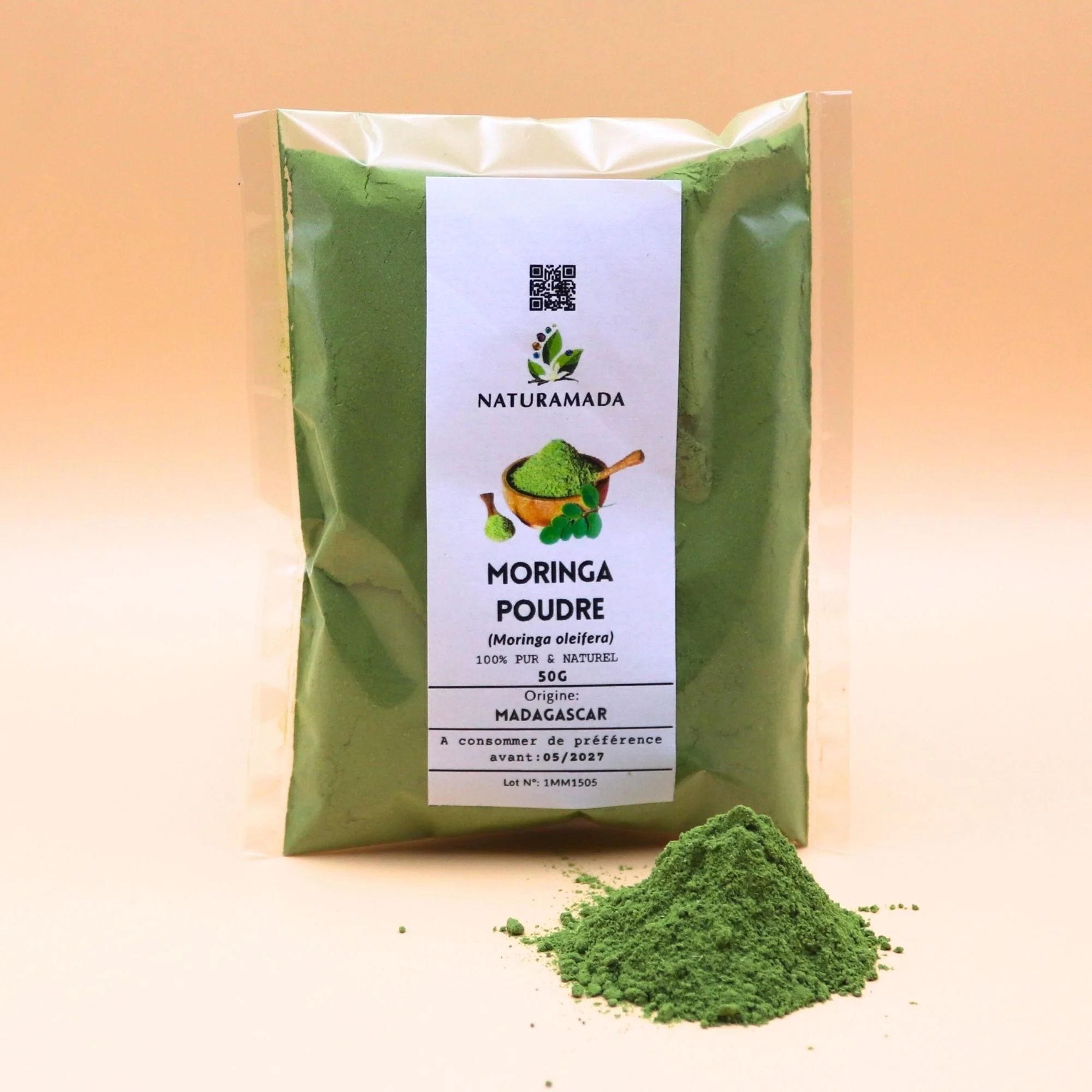
Moringa Naturamada powder – Moringa oleifera
Moringa is an emblematic tropical tree. It belongs to the Moringaceae family. Originating in northern India, it has since spread widely across Africa, Asia and the world’s tropical regions. Today, it is found in Madagascar, where it is known asAnanambo. This is where we harvest its leaves. They are then dried naturally and ground into powder. This traditional process preserves their intense green color, as well as their sweet, herbal flavor. Although deeply rooted in tropical culinary cultures, moringa remains little-known in Western cuisine.
Why choose moringa powder?
For centuries, moringa leaves have been part of the traditional diet of many populations. Moringa is often referred to as the “tree of life” in many parts of the world. The leaves are known to be naturally rich in vitamins and antioxidants, making them a preferred ingredient in gentle detox routines, periods of dietary transition or efforts to return to a simpler, plant-based diet.
Incorporate moringa into your daily recipes
Traditionally, moringa is eaten as fresh or dried leaves in local dishes. In Madagascar, moringa leaves are traditionally used in romazava, the island’s emblematic broth, to accompany rice.
Today, this green powder can be used in a multitude of preparations. Its delicate flavour does not mask the other ingredients, making it easy to incorporate.
Smoothies and fresh juices are the most accessible gateway. A teaspoon mixed with a banana, plant milk, spinach and almond butter creates an energizing breakfast. Traditional Indian cuisine uses it in vegetable curries and lentil soups. In Senegal, thiebou dieun (rice with fish) is sometimes garnished with fresh leaves or powder at the end of cooking. This practice enriches dishes without fundamentally altering their aromatic profile.
Baked goods have also adopted this nutritious powder, with energy balls, homemade granola bars, banana muffins and weekend pancakes. Combined with cocoa, grated coconut or dates, it blends harmoniously into gourmet desserts.
Creamy dressings and sauces welcome this green touch. Mixed with tahini, lemon and garlic, it transforms a basic sauce into a vitamin-packed condiment for mixed salads or colorful bowls.
Moringa drinks and infusions
Beyond the kitchen, moringa powder lends itself wonderfully to hot and cold drinks, offering an interesting alternative to classic teas and herbal teas.
In India, the birthplace of moringa, it is part of traditional Ayurvedic practices. In fact, a simple infusion of the powder in hot water accompanies moments of relaxation. In some regions, ginger and honey are added to create a comforting drink with spicy notes.
In the Philippines, where malunggay (the local name for moringa) is ubiquitous, it is consumed as an infusion after meals. This habit is part of a tradition of well-being handed down from generation to generation.
Moringa lattes are gaining in popularity in wellness cafés around the world. Whipped with frothy oat milk, a touch of maple syrup and a pinch of cardamom, the powder creates a creamy drink visually spectacular thanks to its emerald green hue.Detox water represents the most minimalist option: moringa powder, cucumber slices, mint leaves and filtered water form a thirst-quenching drink ideal for hot days.
Product information
Botanical name : Moringa oleifera
Origin: Madagascar
Dried leaf powder
Packaged in France
FAQ – Moringa Oleifera powder
What does moringa powder taste like?
Moringa powder has a vegetal, slightly herbaceous taste, reminiscent of certain green plants or matcha tea. Its flavor remains mild but characteristic. It can be easily incorporated into drinks, smoothies or culinary preparations, often combined with fruit or honey to balance its natural taste.
How to use moringa powder?
Moringa can be blended into juices, smoothies and yoghurts. It can also be used as an infusion. As with any plant consumed on a regular basis, it is advisable to seek the advice of a health professional before prolonged consumption.
What are moringa’s traditional uses?
Moringa has been consumed for centuries in many parts of Africa and Asia. The dried, powdered leaves are traditionally incorporated into the daily diet to enrich dishes. They are often added to broths, sauces, drinks or family preparations. Moringa is thus considered a versatile ingredient in many culinary cultures.
How to store moringa powder?
Store powder in a dry place, away from light, heat and moisture, in an airtight container.