

Why is clove associated with the mouth, speech and protection in many cultures?
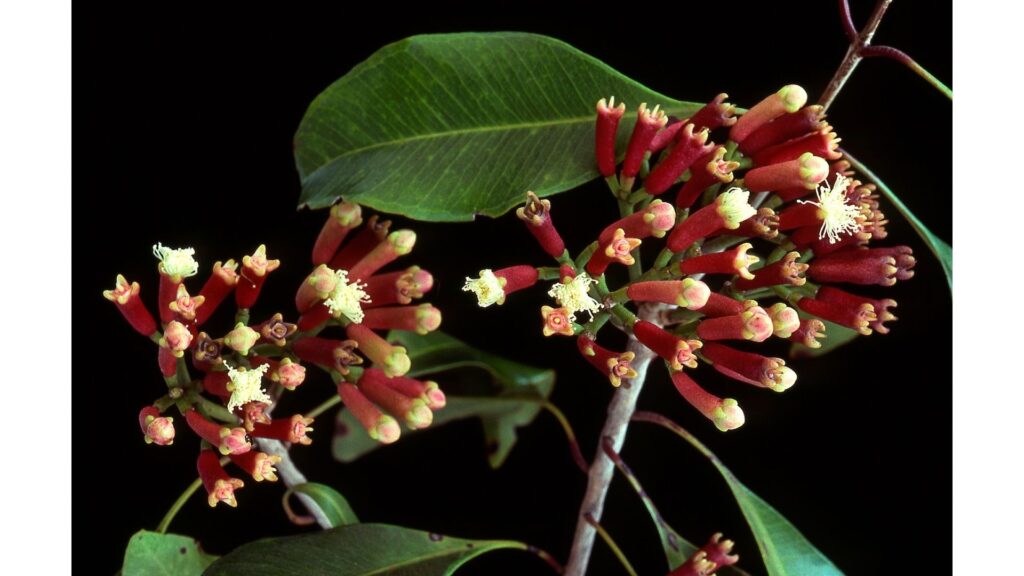
In many parts of the world clove is associated with the mouth, speech, breathing and even symbolic notions of protection. This cultural convergence is intriguing: why does this small dried flower find itself linked to these specific uses, sometimes far removed geographically?
1. Cloves and the oral region: a surprising cultural convergence
In many Asian and African cultures, cloves are chewed or used as a decoction, often to freshen breath or aid digestion.
Examples:
In Southeast Asia, it has historically been used to freshen breath before social or ceremonial exchanges (Encyclopaedia Britannica, n.d.).
In India, Ayurveda mentions its use for oral hygiene and oral comfort (Pramod, Ansari, & Ali, 2010).
In medieval Europe, it was incorporated into mixtures designed to mask body odors, particularly those of the mouth.

2. Why this immediate sensation in the mouth?
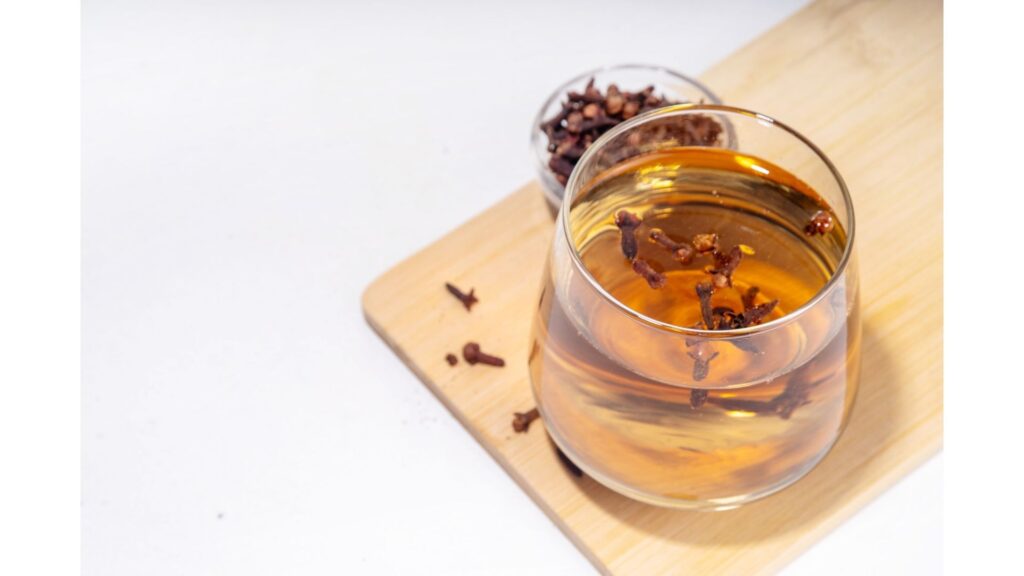
Cloves contain a high concentration ofeugenol, a volatile aromatic compound that is mildly anesthetic and antibacterial (Chaieb et al., 2007; Cortés-Rojas, de Souza, & Oliveira, 2014). Eugenol acts on sensory receptors in the mouth, limits the proliferation of oral bacteria and provides an immediate sensation. It is known to produce this slightly anesthetic sensation when in contact with the oral mucosa, a perception often described as a slight “numbness” or diffuse warmth in the mouth. This property has historically encouraged the use of cloves close to the oral sphere or in aromatic beverages (Özbek, A. & Ergönül, M. 2024).
3. Word, breath and protection: an ancient symbolic link
In some traditional cultures, cloves have been associated with speech and the notion of social or spiritual protection.
For example:
In ancient China, chewing a clove before an imperial audience was part of a ritual of symbolic preparation for the verbal exchange.
Inmedieval Europe, the clove was sometimes worn or placed in textiles and clothing, not only for its fragrance, but also in contexts of protection against bad odors and symbolically against harmful influences (Wikipedia, 2025).
This link between smell, clear speech and social presence reflects an ancient understanding of the relationship between body, speech and the social world.

4. Contemporary reading: why these uses are making a comeback today
Several trends explain the renewed interest in cloves in 2026. On the one hand, there is a return to identifiable ingredients, which can be easily recognized and used in traditional cooking or preparations. On the other hand, there is a growing curiosity about the links between culture and sensory uses, prompting exploration of how certain spices influence perception, memory and everyday gestures.
Conclusion
The clove embodies a link between culture, history and science. Its use, whether culinary, symbolic or sensory, reveals how a plant can stand the test of time while retaining its relevance today. Scientific data on its bioactive compounds, such as eugenol, confirm certain properties observed traditionally, notably on the mouth and speech, but do not replace the cultural context and ancestral practices. Understanding cloves in terms of their traditional use, their cultural symbolism and their scientific value will enable us to fully appreciate this spice in our everyday cooking and actions.
Bibliography
Chaieb, K., Hajlaoui, H., Zmantar, T., Kahla-Nakbi, A. B., Rouabhia, M., Mahdouani, K., & Bakhrouf, A. (2007). The chemical composition and biological activity of clove essential oil. Phytotherapy Research, 21(6), 501-506. https://doi.org/10.1002/ptr.2124
Cortés-Rojas, D. F., de Souza, C. R. F., & Oliveira, W. P. (2014). Clove(Syzygium aromaticum): A precious spice. Asian Pacific Journal of Tropical Biomedicine, 4(2), 90-96. https://www.sciencedirect.com/science/article/pii/S222116911360839X
Encyclopaedia Britannica (n.d.). Clove. https://www.britannica.com/plant/clove
Özbek, A., & Ergönül, M. (2024). Clove essential oil and eugenol: A review of their significance and uses. Food Bioscience, 62, 105112. https://doi.org/10.1016/j.fbio.2024.105112
Pramod, K., Ansari, S. H., & Ali, J. (2010). Eugenol: A natural compound with versatile pharmacological actions. Natural Product Communications, 5(12), 1999-2006. https://journals.sagepub.com/doi/10.1177/1934578X1000501229
Van Wyk, B.-E., & Wink, M. (2017). Medicinal plants of the world (2nd ed.). CABI. https://www.cabi.org/bookshop/book/9781780647814/
World Health Organization. (1999). WHO monographs on selected medicinal plants (Vol. 1). https://apps.who.int/iris/handle/10665/42052
Did you like this article?
See also: