 Shipping costs €6.90
 Free shipping on orders over €80 in the EU
 Estimated delivery time 3-5 days
 Secure payment
 Parcel tracking number
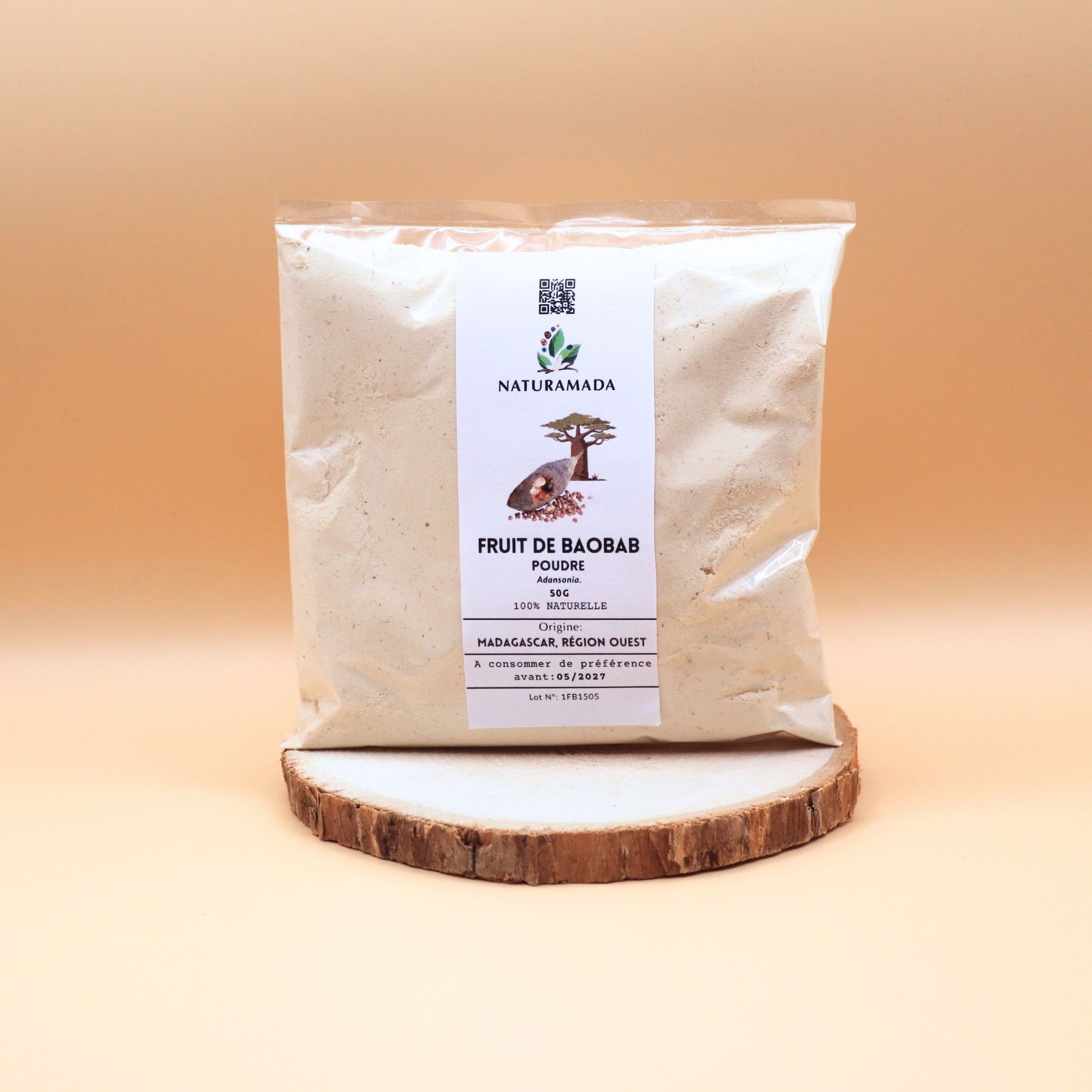
Baobab powder is obtained from the pulp of the baobab fruit, naturally dried and then finely powdered. It is distinguished by its slightly tangy, fresh, fruity flavor and fine, even texture.
The baobab(Adansonia digitata) is also known by the following names:
-
Pain de singe (common name in French)
-
African Baobab
-
Monkey bread (English)
These names refer to the fruit’s dry, naturally floury pulp.
Origin and use
The baobab(Adansonia digitata) is an emblematic tree of the African landscape, present for thousands of years. It occupies an important place in local cultures, where it is often considered a tree of life, due to its many food and domestic uses.
Harvesting baobab fruit requires neither felling nor cutting the tree. Ripe fruit falls naturally or is hand-picked, then opened to extract the dry pulp. This harvesting method respects the natural cycle of the tree, which continues to produce year after year.
Local populations have traditionally consumed the fruit pulp for generations, in simple drinks and culinary preparations. This ancestral use is based on careful management of the resource, adapted to the environment and natural rhythms.
Food applications
-
Drinks:
Diluted in water, juices or smoothies (approx. 1 to 2 teaspoons per serving), to add a fruity, slightly tangy note. -
Dairy products and plant-based alternatives:
Mixed into yoghurts, fromage frais, plant milks or porridges, where it acts as a natural flavoring agent. -
Patisserie and sweet cooking:
Incorporated into cakes, cookies or homemade desserts, as a complement to other flours or powders (in small quantities). -
Traditional culinary preparations:
In many parts of Africa, baobab pulp is used to prepare fermented or non-fermented drinks, porridges or slightly acidic sauces for everyday consumption.
Composition
-
Ingredient: 100% baobab powder
-
Part used: fruit pulp
-
Origin: Madagascar
-
Net weight: 50 g
-
No additives, no added sugar